Introduction to Tech Trends GFXProjectality
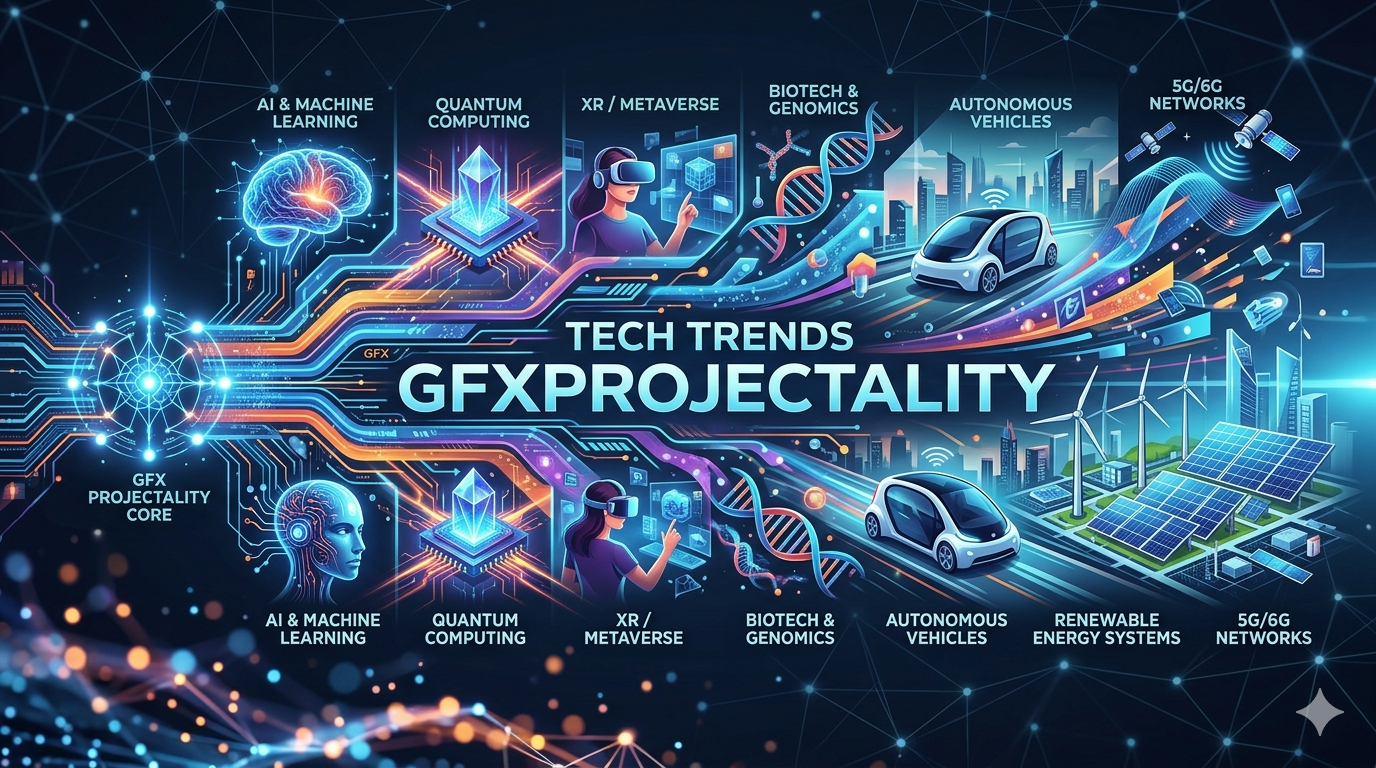
Technology evolves faster than ever before, and businesses, creators, and developers are constantly searching for the next breakthrough that can redefine industries. One emerging concept gaining attention is Tech Trends GFXProjectality. While the term may sound futuristic, it represents a growing blend of graphic innovation, Tech Trends GFXProjectality project-based digital systems, immersive experiences, and intelligent technologies that are shaping modern digital environments. From AI-generated graphics to virtual production and smart automation, GFXProjectality reflects the direction in which creative technology is heading.
In today’s digital world, companies no longer rely solely on traditional methods of design and development. Instead, they combine advanced graphics systems, cloud collaboration, machine learning, and immersive media to create more engaging user experiences. GFXProjectality symbolizes this transformation by connecting creativity with technical innovation. It is not simply about design trends; it is about building integrated ecosystems where graphics, automation, and technology work together seamlessly.
The importance of understanding these trends is becoming more critical for businesses and individuals alike. Whether someone works in marketing, gaming, web development, filmmaking, or software engineering, staying updated with modern tech trends can provide a competitive advantage. GFXProjectality highlights the future of interconnected creativity, where innovation drives both productivity and audience engagement.
The Rise of AI in Creative Technology
Artificial Intelligence has become one of the strongest driving forces behind modern technological advancements. In the context of GFXProjectality, Tech Trends GFXProjectality AI is changing how designers, developers, and content creators approach their work. Tasks that once required hours of manual effort can now be completed within minutes using AI-powered tools. Graphic generation, animation assistance, automated editing, and intelligent recommendations are now common in creative industries.
One major impact of AI is its ability to generate realistic visuals and designs with minimal human input. AI image generators, video enhancement software, and smart editing platforms have revolutionized digital creativity. Designers can now create concept art, social media graphics, and marketing materials more efficiently than ever before. This does not replace human creativity but enhances it by reducing repetitive tasks and opening new possibilities for experimentation.
Another important aspect is personalization. AI-driven systems analyze user behavior and preferences to create customized digital experiences. Tech Trends GFXProjectality Streaming platforms, online stores, and gaming environments all use intelligent algorithms to deliver more engaging interactions. In the world of GFXProjectality, this personalization helps businesses connect more effectively with their audiences while improving customer satisfaction and retention.
Virtual Reality and Immersive Experiences
Virtual Reality (VR) and Tech Trends GFXProjectality Augmented Reality (AR) are becoming central components of digital innovation. These technologies allow users to interact with digital content in immersive and realistic ways. GFXProjectality embraces these advancements by combining advanced graphics rendering with interactive environments that feel natural and engaging.
The gaming industry has been one of the biggest adopters of VR technology. Modern games now offer highly immersive experiences where players can physically interact with virtual worlds. However, the impact of VR extends far beyond entertainment. Educational institutions, healthcare providers, and corporate training programs are also integrating immersive technology into their operations. Medical students can practice surgeries virtually, while companies can simulate real-world scenarios for employee training.
AR technology is equally transformative because it overlays digital elements onto the real world. Retail companies use AR to allow customers to visualize products before purchasing them. Interior designers use it to demonstrate room layouts, and social media platforms integrate AR filters for enhanced engagement. GFXProjectality represents this blend of creativity and interactivity, where technology enhances real-world experiences rather than replacing them.
Cloud Computing and Collaborative Innovation
Cloud computing has become essential for modern businesses and creative teams. In the past, large projects required expensive hardware and local storage systems. Tech Trends GFXProjectality Today, cloud platforms allow teams from different parts of the world to collaborate in real time. This shift has significantly improved productivity and accessibility across industries.
One of the biggest advantages of cloud technology is scalability. Businesses can easily increase or decrease their computing resources based on project requirements. For creative professionals working with high-resolution graphics, animations, or video production, cloud-based systems provide powerful processing capabilities without requiring expensive personal hardware.
Collaboration is another major benefit. Designers, developers, editors, and marketers can work on the same project simultaneously using cloud-based platforms. This improves communication, speeds up production timelines, and reduces operational barriers. GFXProjectality thrives in this environment because it depends heavily on integrated workflows and digital cooperation.
Additionally, cloud security and backup systems have improved significantly over the years. Data loss, which was once a major concern for creative professionals, Tech Trends GFXProjectality is now less problematic due to automated backups and advanced cybersecurity measures. This allows teams to focus more on innovation and less on technical limitations.
The Impact of 3D Graphics and Visual Computing
The demand for high-quality visuals continues to grow across every digital platform. From video games and movies to websites and advertising campaigns, 3D graphics have become an essential component of modern communication. GFXProjectality strongly emphasizes visual computing because graphics are at the heart of digital engagement.
Modern GPUs and rendering technologies have made real-time graphics more powerful than ever. Filmmakers can now create realistic digital environments without relying entirely on physical sets. Video game developers use advanced rendering engines to build visually stunning worlds that feel lifelike and immersive. These innovations are not limited to entertainment industries alone.
Businesses are also adopting 3D visualization technologies for practical applications. Architects use 3D modeling to present building designs, while manufacturers use digital twins to simulate products before production. E-commerce companies increasingly use 3D product displays to improve online shopping experiences. Consumers are more likely to engage with interactive visuals than static images, making this technology highly valuable.
Visual computing also plays a critical role in data analysis and artificial intelligence. Complex information can be transformed into interactive visual dashboards that make decision-making easier. GFXProjectality reflects this evolution by combining technical precision with creative presentation, enabling users to understand and interact with information more effectively.
Blockchain Technology and Digital Ownership
Blockchain technology is another major trend influencing the future of digital innovation. Initially associated primarily with cryptocurrencies, blockchain now has applications across various industries, including gaming, digital art, cybersecurity, and supply chain management. In the world of GFXProjectality, blockchain introduces the concept of verified digital ownership and decentralized systems.
One of the most discussed developments has been NFTs, or non-fungible tokens. NFTs allow creators to sell and verify ownership of digital assets such as artwork, animations, music, and collectibles. This has created new income opportunities for artists and content creators while giving audiences a way to own unique digital items.
Beyond digital art, blockchain improves transparency and security in online systems. Smart contracts automate transactions and agreements without requiring intermediaries. This reduces costs, increases trust, and minimizes fraud. Industries that rely heavily on digital collaboration can benefit greatly from these decentralized systems.
Blockchain also supports secure identity management and data protection. As concerns about privacy continue to grow, decentralized technologies may become increasingly important for maintaining digital security. GFXProjectality integrates these ideas by promoting a future where creative assets and digital interactions are both innovative and secure.
The Evolution of Smart Devices and IoT
The Internet of Things (IoT) has transformed ordinary devices into intelligent systems capable of communication and automation. Smart homes, wearable devices, connected vehicles, and industrial automation systems are all examples of how IoT is reshaping modern life. GFXProjectality aligns with this trend by emphasizing interconnected technology ecosystems.
Smart devices collect and analyze real-time data to improve efficiency and user convenience. For example, smart thermostats adjust temperatures automatically based on user behavior, while wearable fitness devices track health metrics continuously. Businesses use IoT systems to monitor equipment performance, optimize logistics, and reduce operational costs.
The integration of IoT with AI creates even more advanced capabilities. Smart systems can predict maintenance needs, automate workflows, and provide personalized recommendations. This combination improves both efficiency and user experience across multiple industries.
As IoT adoption increases, the importance of cybersecurity also grows. Connected systems can become vulnerable to cyberattacks if not properly secured. Therefore, businesses and developers must prioritize data protection and secure communication protocols. GFXProjectality highlights the importance of balancing innovation with responsible technology management.
Sustainable Technology and Green Innovation
Sustainability has become a major priority in the technology industry. Companies are increasingly focusing on environmentally friendly practices, energy-efficient systems, and sustainable production methods. GFXProjectality reflects this shift by encouraging innovation that supports both technological progress and environmental responsibility.
One key area of focus is renewable energy integration. Data centers, which consume large amounts of electricity, are transitioning toward solar, wind, and other renewable energy sources. Technology companies are also investing in carbon reduction initiatives and energy-efficient hardware solutions.
Electronic waste management is another important issue. As devices become outdated more quickly, proper recycling and sustainable manufacturing practices are essential. Many companies now design products with recyclable materials and longer life cycles to reduce environmental impact.
Green software development is also gaining popularity. Developers optimize applications to use fewer resources, reducing energy consumption and improving efficiency. Sustainable innovation is no longer optional; it is becoming a standard expectation for modern businesses and consumers alike.
Cybersecurity in the Age of Digital Transformation
As technology becomes more advanced, cybersecurity threats continue to evolve. Businesses and individuals now store vast amounts of sensitive information online, making digital security more important than ever. GFXProjectality recognizes cybersecurity as a fundamental aspect of modern technological development.
Cyberattacks have become increasingly sophisticated, targeting everything from financial systems to healthcare networks. Ransomware attacks, phishing scams, and data breaches can cause severe financial and reputational damage. As a result, organizations are investing heavily in advanced security solutions.
Artificial intelligence is now being used in cybersecurity to detect unusual behavior and identify threats in real time. Machine learning systems analyze massive amounts of data to recognize suspicious activities before significant damage occurs. This proactive approach improves overall security and response times.
User awareness also plays a critical role in cybersecurity. Strong passwords, multi-factor authentication, and safe browsing habits are essential for protecting personal and professional information. In the future, cybersecurity will remain one of the most important pillars of digital innovation and technological trust.
The Future of Remote Work and Digital Collaboration
Remote work has permanently changed the structure of modern workplaces. Advances in communication technology, cloud computing, and collaboration platforms have enabled teams to work efficiently from virtually anywhere. GFXProjectality supports this transformation by encouraging flexible, technology-driven work environments.
Video conferencing tools, project management platforms, and cloud collaboration systems have become essential business resources. Teams can now share files, conduct meetings, and manage projects seamlessly across different locations and time zones.
The rise of virtual offices and digital workspaces has also created new opportunities for businesses. Companies can access global talent pools without geographical limitations, while employees benefit from increased flexibility and improved work-life balance.
However, remote work also presents challenges such as communication gaps, productivity management, and cybersecurity concerns. Businesses must develop strong digital strategies and workplace cultures to maintain efficiency and collaboration in remote settings.
Conclusion: Why Tech Trends GFXProjectality Matters
Tech Trends GFXProjectality represents more than just a collection of modern technologies. It symbolizes the convergence of creativity, innovation, automation, and digital transformation. From artificial intelligence and immersive experiences to blockchain, IoT, and sustainable innovation, these trends are shaping the future of industries worldwide.
Understanding these developments is essential for businesses, creators, and professionals who want to remain competitive in a rapidly changing world. Technology is no longer isolated within technical departments; it influences communication, entertainment, education, commerce, healthcare, and everyday life.
The future will likely bring even more integration between intelligent systems and human creativity. Companies that embrace innovation while maintaining ethical responsibility and cybersecurity awareness will be better positioned for long-term success. GFXProjectality ultimately reflects the evolution of digital ecosystems where technology empowers people to create smarter, faster, and more meaningful experiences.
As the digital landscape continues to evolve, staying informed about emerging tech trends will become increasingly important. Those who adapt early will not only survive technological change but thrive within it.