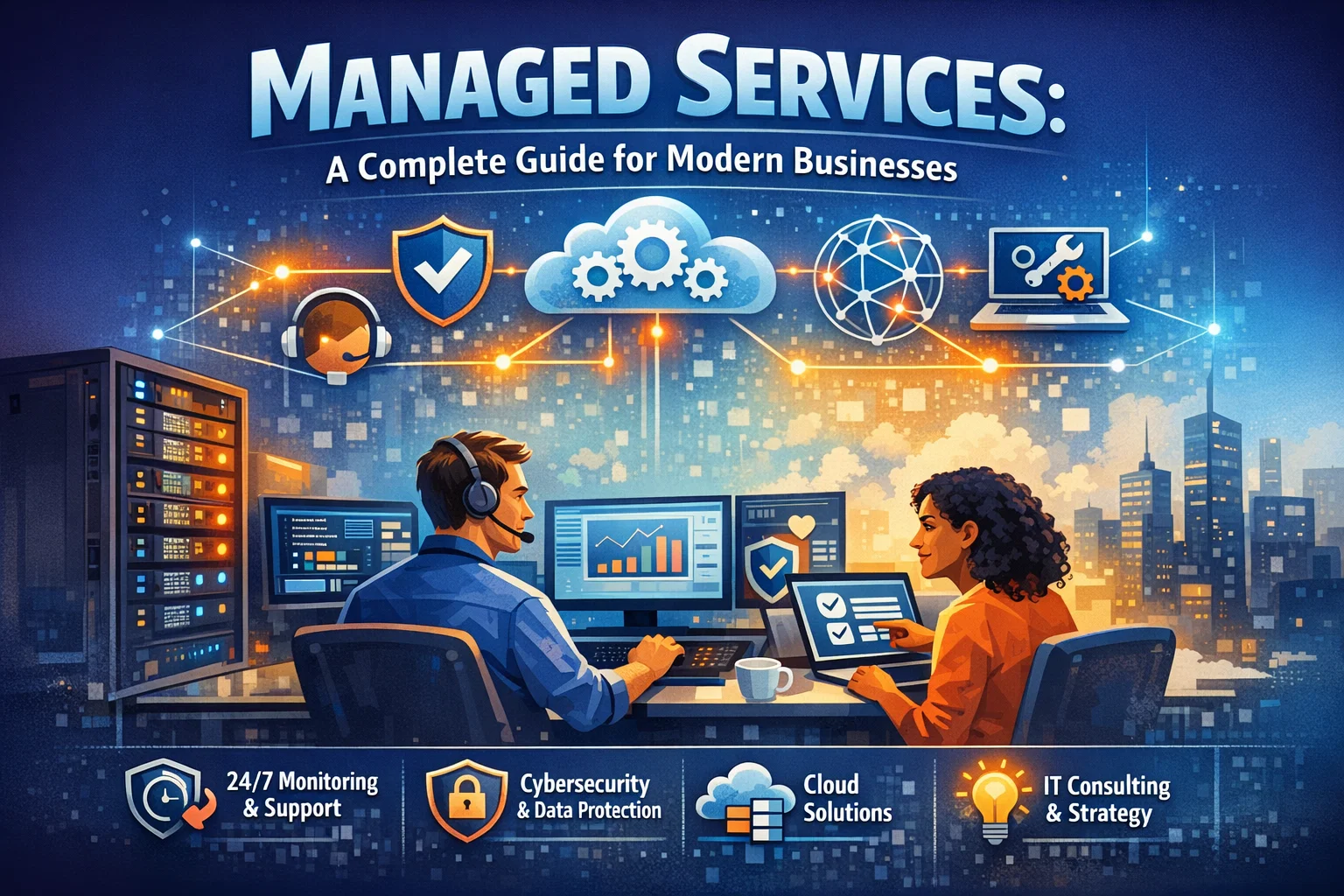
In today’s fast-moving digital world, businesses must stay strong, safe, and smart. This is where managed services come in. Managed services help companies handle their technology, systems, and daily operations with ease. Instead of doing everything alone, businesses can partner with experts who manage important tasks for them.
This article will explain everything you need to know about managed services in a simple and clear way. You’ll learn what they are, how they work, their benefits, and why they matter for the future.
What Are Managed Services?
Managed services are when a business hires another company to take care of its IT (Information Technology) needs and other services. These outside companies are called Managed Service Providers (MSPs).
Instead of fixing problems only when they happen, MSPs work all the time to keep systems running smoothly.
Simple Definition
- Managed services = Outsourcing IT tasks to experts
- MSP = The company that provides these services
Think of it like hiring a professional gardener. Instead of waiting for weeds to grow, the gardener takes care of your garden regularly.
How Managed Services Work
Managed services follow a proactive approach. That means problems are prevented before they even happen.
Key Steps in the Process
- Monitoring systems 24/7
- Identifying issues early
- Fixing problems quickly
- Updating software regularly
- Providing support when needed
Example
A company’s computer network might slow down. Instead of waiting for it to crash, an MSP notices the issue early and fixes it. This saves time and avoids trouble.
Types of Managed Services
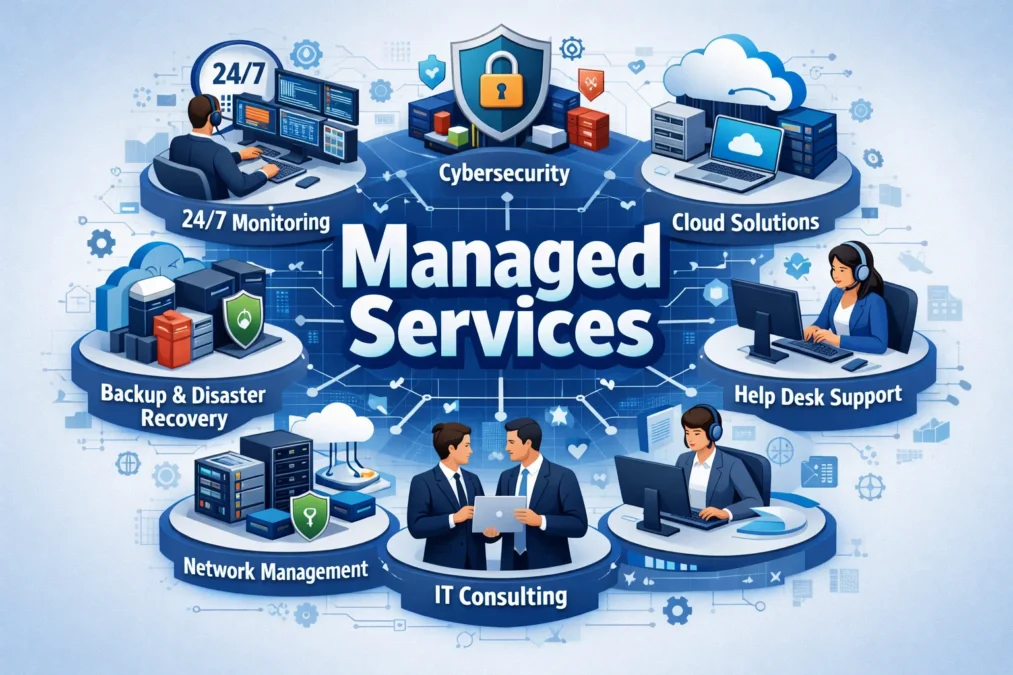
There are many kinds of managed services available. Businesses can choose what they need.
Common Types
- Managed IT Services
- Network management
- Server monitoring
- Help desk support
- Managed Security Services
- Cybersecurity protection
- Virus and malware prevention
- Data protection
- Managed Cloud Services
- Cloud storage
- Data backup
- Cloud migration
- Managed Communication Services
- Email systems
- Messaging platforms
- Video conferencing
- Managed Data Services
- Data analysis
- Database management
- Data recovery
Each type helps businesses focus on their main work while experts handle the technical side.
Benefits of Managed Services
Using managed services offers many advantages. Businesses of all sizes can benefit from them.
Major Benefits
- Cost Savings
- No need to hire a large IT team
- Fixed monthly costs
- Expert Support
- Access to skilled professionals
- Latest tools and technologies
- Better Security
- Protection from cyber threats
- Regular security updates
- Improved Efficiency
- Faster systems
- Less downtime
- Focus on Core Work
- Businesses can focus on growth
- Less stress about technical issues
In short, managed services make life easier for companies.
Why Businesses Choose Managed Services
Let’s face it—technology can be tricky. Many businesses don’t have the time or knowledge to manage it properly.
Common Reasons
- Lack of IT expertise
- Growing business needs
- Need for better security
- Desire to reduce costs
By using managed services, businesses can stay ahead without worrying about technical problems.
Managed Services vs Traditional IT Support
There is a big difference between managed services and traditional IT support.
Key Differences
| Feature | Managed Services | Traditional IT Support |
|---|---|---|
| Approach | Proactive | Reactive |
| Cost | Fixed monthly fee | Pay per issue |
| Monitoring | 24/7 | Only when needed |
| Problem Solving | Prevent issues | Fix after problems |
| Efficiency | High | Moderate |
Managed services focus on prevention, while traditional support focuses on repair.
Industries That Use Managed Services
Almost every industry uses managed services today.
Popular Industries
- Healthcare
- Education
- Finance
- Retail
- Manufacturing
- Government
For example, hospitals use managed services to protect patient data, while schools use them for online learning systems.
Challenges of Managed Services
While managed services are helpful, they also have some challenges.
Possible Challenges
- Choosing the right provider
- Data privacy concerns
- Dependence on external companies
- Communication issues
But don’t worry—these challenges can be managed by selecting a reliable MSP and setting clear agreements.
How to Choose the Right Managed Service Provider
Choosing the right MSP is very important. A good provider can make a big difference.
Tips for Selection
- Check experience and reputation
- Look for customer reviews
- Understand pricing clearly
- Ask about security measures
- Ensure 24/7 support
Questions to Ask
- What services do you offer?
- How do you handle emergencies?
- What security steps do you take?
- Can you customize services?
Taking time to choose wisely will pay off in the long run.
Future of Managed Services
The future of managed services looks bright. As technology grows, more businesses will need expert help.
Future Trends
- Increased use of Artificial Intelligence (AI)
- Stronger cybersecurity solutions
- Growth of cloud computing
- Remote work support
- Automation of tasks
Managed services will continue to evolve and help businesses stay competitive.
Real-Life Example of Managed Services
Imagine a small online store. The owner wants to sell products but doesn’t understand IT systems.
Without Managed Services
- Website crashes often
- Data may be lost
- Security risks increase
With Managed Services
- Website runs smoothly
- Data is backed up
- Customers feel safe
This shows how powerful managed services can be.
Key Features of Managed Services
Let’s quickly look at the main features of managed services.
Important Features
- 24/7 monitoring
- Regular updates
- Data backup
- Security management
- Help desk support
These features ensure systems stay strong and reliable.
Final Thoughts on Managed Services
In conclusion, managed services are a smart and modern solution for businesses. They provide expert support, improve security, reduce costs, and help companies grow.
By choosing managed services, businesses don’t have to worry about technical problems. Instead, they can focus on what they do best—serving customers and building success.
So, whether you’re running a small startup or a large company, managed services can be your trusted partner in today’s digital world.