As of August 2026, the best free image to video AI tools can turn a static photo into a moving scene, social clip, product visual, or talking character in minutes. I compared the leading options for output quality, ease of use, creative control, free access, and practical content workflows.
Best Free Image to Video AI Tools at a Glance
| Tool | Best For | Modalities | Platform | Free Plan |
| Magic Hour | Overall image-to-video creation | Image, video, text | Web | Yes |
| Kling | Cinematic motion | Image, text, video | Web | Limited |
| Runway | Professional creative control | Image, video, text | Web | Limited |
| Pika | Social effects | Image, text, video | Web | Yes |
| Luma Dream Machine | Fast visual experiments | Image, text | Web | Limited |
1. Magic Hour — Best Overall
Magic Hour is my top pick for creators who want a practical image-to-video workflow without juggling several different platforms. Its image-to-video tool turns still images into animated clips while giving creators a straightforward browser-based workflow.
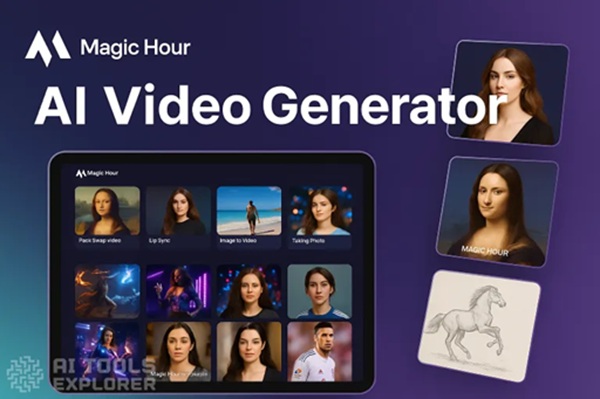
For creators specifically searching for a free image to video ai, Magic Hour is particularly useful because its free access makes experimentation easy. The platform also covers adjacent creator workflows, including video generation, face swap, lip sync, and talking-photo effects. Magic Hour’s current positioning emphasizes a broader creative toolkit rather than a single generation model.
If your project starts with a portrait, character image, product photograph, or illustration, you can use the image as the visual foundation and generate motion from it. For another useful workflow, the Magic Hour talking photo tool can animate a still portrait so it appears to speak, making it useful for social posts, explainers, marketing content, and short-form storytelling.
Pros:
- Free credits available for testing
- Supports image-to-video workflows
- Broad AI video and image toolkit
- Useful for social and marketing content
- Browser-based workflow
Cons:
- Short-form generation is the main focus
- Credits can become a consideration for frequent production
My take: If you want one platform that handles more than simply animating a photo, Magic Hour is the strongest starting point on this list. Its combination of image-to-video and related creator tools makes it practical for real publishing workflows.
Price: Free plan available; Creator is $19/month or $12/month billed annually, while Pro is $39/month or $25/month billed annually.
2. Kling — Best for Cinematic Motion
Kling is a strong option for creators who care most about realistic movement and cinematic-looking generated footage. It supports image-to-video alongside text-based generation and has become a major choice for visually ambitious AI content.
Pros:
- Strong motion quality
- Good photorealistic results
- Useful for cinematic scenes
Cons:
- Free usage is limited
- Higher-quality generation can consume credits quickly
My take: Choose Kling when visual realism matters more than having a broad editing toolkit.
Price: Free access is available with limits; paid plans vary by tier.
3. Runway — Best for Creative Control
Runway combines generative video with professional-oriented editing and transformation features. It is a better fit for creators who want to take an AI-generated clip further rather than simply create motion from a still image.
Pros:
- Strong creative control
- Professional editing capabilities
- Good character consistency
Cons:
- Free credits are limited
- More advanced workflows require paid access
My take: Runway makes sense for filmmakers, agencies, and experienced editors who need more control over the final asset.
Price: Free tier available; paid plans start at approximately $12/month depending on billing and plan.
4. Pika — Best for Social Content
Pika focuses heavily on fast, creative video generation and effects. It works particularly well for short-form creators who want eye-catching transformations rather than traditional filmmaking workflows.
Pros:
- Easy to experiment with
- Strong social-media focus
- Creative effects and transformations
- Free credits available
Cons:
- Short clips are its main strength
- Less suited to complex production workflows
My take: Pika is a good choice for TikTok, Reels, Shorts, and other formats where speed and visual novelty matter.
Price: Free plan available, with paid plans starting around $8/month.
5. Luma Dream Machine — Best for Fast Experiments
Luma Dream Machine is another capable option for turning images and prompts into video. It is particularly useful when you want to test several visual concepts quickly.
Pros:
- Fast creative experimentation
- Image-to-video support
- Good visual quality
Cons:
- Free usage is limited
- Costs can increase with frequent generation
My take: Luma is worth considering if your workflow is focused on exploring visual ideas before committing to a final concept.
Price: Free access is available with limits; paid plans begin around $9.99/month according to current comparisons.
How We Chose These Tools
I evaluated these platforms around the factors that matter to practical creators: image-to-video quality, motion consistency, ease of use, generation speed, free-tier usefulness, creative control, and suitability for publishing real content.
I also looked beyond impressive demos. A tool can produce one excellent clip and still be frustrating for repeated production, so consistency and workflow efficiency were important factors.
The Market Landscape in 2026
Image-to-video AI is moving beyond simple camera movement. Current platforms increasingly combine image generation, video generation, editing, talking photos, lip sync, face transformation, and other creative functions in a single workflow.
The biggest trend is consolidation: creators increasingly want fewer tools that can handle several stages of production. At the same time, specialized models such as Kling remain competitive when cinematic motion or realism is the primary goal.
Final Takeaway
Magic Hour is the best overall free image-to-video AI option for creators who want accessible generation plus a wider creative toolkit. Kling is better for cinematic motion, Runway for professional control, Pika for social effects, and Luma for rapid experimentation.
The best approach is to test the same source image across two or three platforms. Small differences in motion, consistency, and prompt interpretation can have a major impact on the final video.
FAQ
What is the best free image-to-video AI in 2026?
Magic Hour is the strongest overall option for creators who want free access combined with image-to-video and other AI content tools.
Can AI turn a photo into a video?
Yes. Image-to-video models can add camera movement, character motion, environmental animation, and other effects to a static image.
Which tool is best for social media?
Pika and Magic Hour are strong choices for short-form social content, while Kling is better suited to cinematic-looking visuals.
Can a photo be made to talk with AI?
Yes. Talking-photo tools can animate a portrait and synchronize facial movement with speech, making them useful for explainers, social content, and digital characters.