Water damage is one of the most common and costly problems homeowners face. Whether it’s caused by a burst pipe, heavy rain, overflowing appliances, or sewage backups, even a small amount of water can quickly turn into a major restoration project if left untreated.
For homeowners in Charlotte, North Carolina, understanding the restoration process is especially important. Seasonal storms, aging plumbing systems, humid weather, and occasional flash flooding increase the likelihood of residential water damage throughout the year. Acting quickly not only protects your home but also helps reduce repair costs and prevents long-term structural issues.
This guide explains everything homeowners should know about water damage restoration in Charlotte—from identifying the warning signs to understanding the restoration process and learning how to prevent future damage.
Why Water Damage Is a Serious Issue:
Water damage affects much more than what you can see. While wet carpets and stained walls are obvious indicators, moisture often spreads behind drywall, beneath flooring, and inside insulation where it can remain hidden for weeks. Working with experienced restoration professionals such as Charlotte Water Damage can help identify hidden moisture early and prevent more extensive structural damage.=
If moisture isn’t professionally removed within 24 to 48 hours, several problems may develop:
-
Mold growth
-
Wood rot
-
Drywall deterioration
-
Damaged flooring
-
Electrical hazards
-
Structural weakening
-
Poor indoor air quality
According to industry research, mold can begin developing within just one to two days after water exposure. The faster restoration begins, the lower the overall repair costs and the greater the chance of saving building materials.
Common Causes of Water Damage in Charlotte Homes:
Charlotte homeowners experience water damage from various sources throughout the year. Understanding these causes helps reduce the risk of unexpected emergencies.
1. Plumbing Leaks
Burst pipes, leaking supply lines, worn pipe fittings, and hidden plumbing leaks remain among the leading causes of residential water damage.
Even a slow leak beneath a sink can cause extensive damage over time.
2. Heavy Rainfall and Storms
Charlotte receives frequent thunderstorms, especially during spring and summer. Heavy rainfall can overwhelm drainage systems, leading to basement flooding or water intrusion through roofs, windows, and foundations.
3. Roof Damage
Missing shingles, damaged flashing, clogged gutters, or aging roofing materials allow rainwater to seep into attics and ceilings.
Many homeowners don’t notice roof leaks until water stains appear indoors.
4. Appliance Failures
Water heaters, dishwashers, refrigerators, washing machines, and HVAC systems all use water connections that can eventually fail.
A broken washing machine hose alone can release hundreds of gallons of water in a short period.
5. Sewage Backups
Blocked sewer lines or municipal drainage issues can force contaminated water back into the home.
This type of water damage requires immediate professional cleanup due to health risks.
Signs Your Home Needs Water Damage Restoration:
Some water damage is obvious, while other problems remain hidden until significant deterioration occurs.
Watch for these warning signs:
-
Water stains on ceilings or walls
-
Bubbling or peeling paint
-
Soft drywall
-
Warped hardwood flooring
-
Buckled laminate flooring
-
Musty odors
-
Mold growth
-
Unexpected increase in water bills
-
Damp carpeting
-
Cracks in walls caused by moisture
Ignoring these signs often leads to larger restoration expenses later.
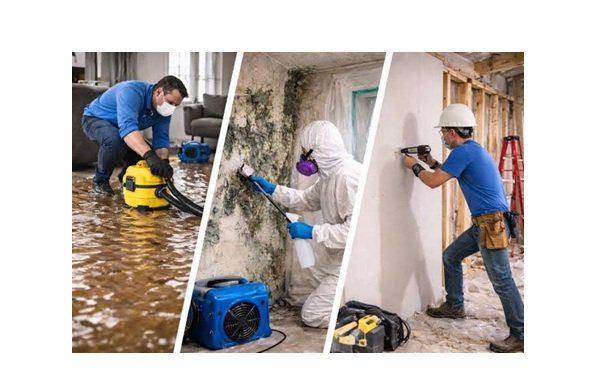
Understanding the Water Damage Restoration Process:
Professional restoration companies follow a systematic approach designed to minimize damage and return your home to its pre-loss condition.
Initial Inspection
The restoration team begins by identifying the source of water, evaluating affected materials, and measuring moisture levels using specialized equipment.
This inspection determines the extent of hidden damage and helps create a restoration plan.
Water Extraction
Standing water is removed using industrial pumps and high-capacity extraction equipment.
Removing water quickly prevents additional damage and speeds up the drying process.
Drying and Dehumidification
Even after visible water disappears, moisture remains trapped inside building materials.
Professionals use:
-
Commercial air movers
-
Industrial dehumidifiers
-
Moisture meters
-
Thermal imaging cameras
These tools ensure hidden moisture is completely eliminated.
Cleaning and Sanitizing
Water damage often leaves behind bacteria, dirt, odors, and contaminants.
Affected areas are cleaned, disinfected, and deodorized using professional-grade antimicrobial products.
Restoration and Repairs
Once the property is dry, damaged materials are repaired or replaced.
This may include:
-
Drywall replacement
-
Flooring installation
-
Ceiling repairs
-
Painting
-
Trim replacement
-
Cabinet repairs
-
Structural restoration
The goal is to restore the home safely and efficiently.
Different Categories of Water Damage:
Not all water damage is the same. Restoration professionals classify water into three categories.
Category 1: Clean Water
Originates from:
-
Broken supply lines
-
Sink overflows
-
Appliance leaks
Although relatively safe initially, clean water can quickly become contaminated if left untreated.
Category 2: Gray Water
Contains moderate contamination from sources such as:
-
Washing machines
-
Dishwashers
-
Toilet overflows without waste
Professional cleaning is recommended.
Category 3: Black Water
Highly contaminated water from:
-
Sewage backups
-
Floodwater
-
River flooding
Black water poses serious health hazards and requires specialized restoration procedures.
Does Homeowners Insurance Cover Water Damage?
Insurance coverage depends on the cause of the damage.
Many homeowners’ policies cover sudden and accidental water damage, including burst pipes or appliance failures.
However, gradual leaks caused by poor maintenance are often excluded.
Flood damage from rising groundwater usually requires a separate flood insurance policy.
After discovering water damage:
-
Stop the water source if possible.
-
Document all affected areas with photographs.
-
Contact your insurance company.
-
Begin mitigation immediately.
-
Keep receipts for emergency expenses.
Why DIY Water Cleanup Isn’t Always Enough:
Many homeowners assume fans and household wet vacuums are sufficient.
Unfortunately, hidden moisture often remains inside walls, insulation, and flooring.
Professional restoration companies use specialized equipment capable of detecting moisture invisible to the naked eye.
Attempting DIY restoration may lead to:
-
Hidden mold growth
-
Lingering odors
-
Structural deterioration
-
Insurance claim complications
-
Higher repair costs later
Professional restoration focuses on complete drying—not just visible cleanup.
How to Prevent Future Water Damage:
While not every emergency is preventable, homeowners can significantly reduce risk with regular maintenance.
Consider these preventive measures:
-
Inspect plumbing annually.
-
Replace aging water supply hoses.
-
Clean gutters and downspouts regularly.
-
Repair roof damage promptly.
-
Seal foundation cracks.
-
Install a sump pump where necessary.
-
Monitor water pressure.
-
Use smart water leak detectors.
-
Insulate exposed pipes during cold weather.
-
Schedule regular HVAC maintenance.
Routine inspections often identify small problems before they become expensive disasters.
Why Local Experience Matters in Charlotte:
Charlotte’s climate presents unique restoration challenges. High humidity slows natural drying, while seasonal storms increase the risk of roof leaks and flash flooding.
A restoration company familiar with local weather patterns understands how moisture behaves in regional homes and can recommend effective drying strategies.
Additionally, local professionals can respond more quickly during emergencies, helping minimize damage before it spreads.
Frequently Asked Questions:
How quickly should water damage restoration begin?
Ideally within the first 24 hours. Immediate action significantly reduces structural damage and mold growth.
How long does restoration take?
Minor water damage may take three to five days, while extensive damage requiring repairs can take several weeks depending on severity.
Can mold develop after water damage?
Yes. Mold can begin growing within 24 to 48 hours if moisture is not completely removed.
Is replacing drywall always necessary?
Not always. If drying begins quickly, some drywall can be saved. Severely saturated or contaminated materials usually require replacement.
Should I leave standing water until insurance arrives?
No. Insurance companies generally expect homeowners to take reasonable steps to prevent additional damage.
Final Thoughts:
Water damage can happen unexpectedly, but understanding the restoration process allows homeowners to respond quickly and confidently. Whether the issue stems from a plumbing leak, severe storm, appliance failure, or sewage backup, immediate mitigation is essential to protecting both your property and your investment.
Charlotte homeowners who recognize early warning signs, understand the different categories of water damage, and seek professional restoration services when necessary are better equipped to minimize repair costs and prevent long-term structural issues. Regular home maintenance, routine inspections, and prompt action during emergencies remain the most effective ways to safeguard your home from water damage.
By staying informed and prepared, you can reduce the impact of water-related emergencies and ensure your home remains safe, healthy, and protected for years to come.