
Introduction
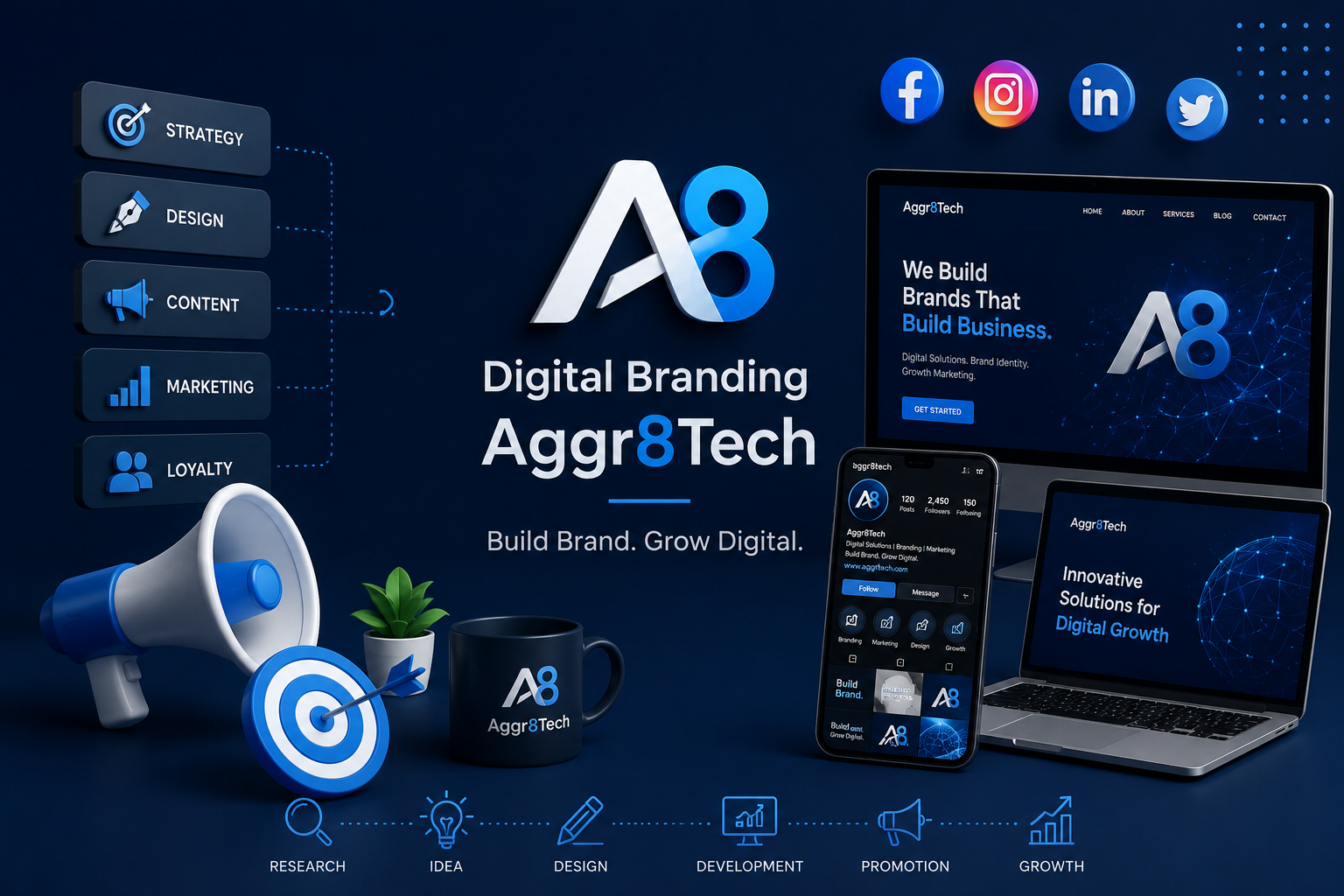
In today’s competitive digital landscape, branding is no longer limited to logos, slogans, or polished advertisements. Modern businesses need a complete digital identity that communicates trust, innovation, authority, and consistency across every online platform. Digital Branding Aggr8Tech This is where Digital Branding Aggr8Tech becomes an important concept for businesses that want to grow, connect with audiences, and stand out in crowded markets.
Digital branding is the process of shaping how people perceive a business online. It combines strategy, content, visual identity, customer experience, social media presence, search visibility, and reputation management into one cohesive system. Aggr8Tech represents a modern and aggressive approach toward technology-driven branding strategies that focus on measurable growth and long-term visibility.
The digital world changes rapidly. Consumer behavior evolves, algorithms shift, and new platforms emerge constantly. Businesses that fail to adapt often lose relevance. On the other hand, companies that invest in strong digital branding build recognition, customer loyalty, and sustainable authority in their industry. Digital Branding Aggr8Tech focuses on exactly that — creating a memorable online presence using smart technology, strategic communication, and innovative digital tools.
Many businesses mistakenly think branding is only necessary for large corporations. In reality, startups, local businesses, eCommerce stores, freelancers, and technology companies all benefit from strong digital branding. Customers trust brands they recognize. Even before making a purchase, users often research online reviews, website quality, social media activity, and overall digital presence. This means branding directly influences buying decisions.
Digital Branding Aggr8Tech emphasizes not just visibility, but meaningful engagement. It is about creating a brand that customers remember and trust. Whether through personalized marketing campaigns, high-quality content, AI-driven customer interactions, or data-focused strategies, digital branding has become one of the most valuable investments a company can make.
This article explores the importance of Digital Branding Aggr8Tech, the strategies involved, the technologies driving modern branding, and how businesses can use these methods to establish a strong and lasting digital identity.
Understanding Digital Branding Aggr8Tech
Digital Branding Aggr8Tech is more than a marketing trend. It is a modern branding philosophy that combines aggressive digital innovation with strategic brand positioning. The goal is to create a powerful online presence that attracts attention while also building trust and credibility.
Traditional branding focused heavily on print media, television, radio, and physical advertisements. While these methods still have value, digital branding reaches audiences where they spend most of their time — online. Websites, social media platforms, search engines, mobile applications, and digital communities have become central to consumer interaction.
Aggr8Tech branding strategies often focus on speed, adaptability, and technology integration. Businesses using this approach leverage analytics, automation, AI tools, and digital marketing channels to strengthen their brand image continuously. Instead of relying solely on static campaigns, they use real-time insights to optimize performance and customer engagement.
One of the defining characteristics of Digital Branding Aggr8Tech is consistency. Every customer interaction should reinforce the same message, values, and visual identity. Whether someone visits a website, watches a social media video, receives an email, or interacts with customer support, the experience should feel connected and professional.
Another important aspect is audience targeting. Modern branding is no longer about speaking to everyone. It is about understanding the right audience deeply and delivering relevant messaging. Businesses now use data-driven strategies to identify customer interests, online behavior, purchasing patterns, and engagement preferences.
Technology also plays a critical role in shaping digital branding success. Artificial intelligence helps businesses personalize customer experiences. Automation tools streamline communication. SEO improves discoverability. Analytics platforms provide insights into audience behavior. Together, these technologies help brands make smarter decisions.
Digital Branding Aggr8Tech also focuses heavily on storytelling. Consumers connect emotionally with brands that have clear missions, authentic values, and relatable narratives. Businesses that communicate their purpose effectively often create stronger customer loyalty than those focusing only on products or pricing.
As competition increases across digital platforms, branding becomes one of the few ways businesses can truly differentiate themselves. Products can be copied, services can be replicated, but a strong brand identity creates a unique market position that competitors struggle to imitate.
The Importance of Digital Branding in Modern Business

Digital Branding Aggr8Tech has become essential because consumer trust increasingly depends on online perception. Before engaging with a business, customers typically research its online presence. A poorly managed digital identity can instantly reduce credibility, while a professional and engaging brand creates confidence.
One major advantage of digital branding is visibility. Search engines, social media platforms, and online communities allow businesses to reach global audiences faster than ever before. A strong digital brand helps companies appear more authoritative and trustworthy in these spaces.
Brand recognition also significantly impacts purchasing decisions. People naturally prefer brands they recognize. When customers repeatedly see consistent messaging, visuals, and value propositions, they become more familiar with the business. Familiarity often leads to trust, and trust drives conversions.
Digital branding also improves customer relationships. Businesses today are expected to engage directly with their audiences. Social media comments, personalized email marketing, online communities, and customer support interactions all shape brand perception. Companies that respond authentically and consistently often build stronger customer loyalty.
Another important benefit is competitive advantage. In saturated markets, branding helps businesses stand apart from competitors. Even if multiple companies offer similar products or services, customers may choose the brand they perceive as more professional, innovative, or trustworthy.
Digital Branding Aggr8Tech strategies also support scalability. As businesses grow, strong branding creates consistency across new products, services, and markets. Customers already familiar with the brand are more likely to trust future offerings.
Reputation management has become another crucial factor. Online reviews, social discussions, and customer feedback can spread rapidly. A strong digital brand actively manages reputation by responding professionally, maintaining transparency, and consistently delivering value.
Branding additionally influences employee attraction and retention. Talented professionals often prefer companies with strong reputations and clear missions. Businesses with effective digital branding are more likely to attract skilled employees who align with their values.
Modern consumers also value authenticity. Generic marketing no longer performs as effectively as genuine communication. Brands that share real stories, meaningful experiences, and honest messaging often create deeper emotional connections with audiences.
In many ways, digital branding acts as the foundation for all online marketing efforts. Advertising campaigns, content strategies, SEO initiatives, and social media marketing become far more effective when supported by a recognizable and respected brand identity.
Core Elements of a Successful Digital Branding Strategy
A successful Digital Branding Aggr8Tech strategy involves multiple interconnected elements working together to create a unified identity. Businesses cannot rely on one tactic alone. Strong branding requires consistency, creativity, and strategic planning.
The first core element is brand identity. This includes logos, typography, color schemes, design styles, and visual presentation. A professional and memorable visual identity helps audiences recognize a brand instantly across different platforms.
The second essential component is brand voice. Every business communicates differently depending on its audience and industry. Some brands use formal communication, while others prefer conversational and friendly messaging. The key is maintaining consistency across all channels.
Website experience is another major factor. A website often serves as the digital headquarters of a brand. Poor design, slow loading times, confusing navigation, or outdated content can damage credibility immediately. A modern, responsive, and user-friendly website strengthens brand perception.
Content marketing also plays a central role in digital branding. Blogs, videos, podcasts, infographics, and social media posts help businesses educate, inform, and engage audiences. Valuable content positions a brand as an authority in its niche.
Search engine optimization is equally important. Even the strongest brand cannot succeed online if people cannot find it. SEO helps businesses increase visibility in search engine results, bringing more traffic and potential customers to their platforms.
Social media presence has become one of the most influential branding tools available today. Platforms like Instagram, LinkedIn, TikTok, Facebook, and X allow brands to connect directly with audiences in real time. Consistent posting, authentic interaction, and engaging content strengthen brand loyalty.
Another critical element is customer experience. Branding is not only what a company says about itself; it is also how customers feel after interacting with the business. Positive experiences create emotional connections that encourage repeat business and referrals.
Email marketing remains highly effective for nurturing customer relationships. Personalized email campaigns help maintain communication, share updates, and strengthen engagement without being intrusive.
Analytics and performance tracking are also central to Aggr8Tech branding strategies. Businesses must continuously analyze customer behavior, campaign effectiveness, engagement metrics, and conversion rates to optimize their branding efforts.
Finally, adaptability is essential. Digital trends evolve rapidly, and successful brands remain flexible enough to adopt new technologies, platforms, and communication styles while preserving their core identity.
How Technology Drives Digital Branding Aggr8Tech
Technology has transformed digital branding from a creative process into a data-driven ecosystem. Businesses now have access to advanced tools that provide deeper insights, greater efficiency, and improved customer engagement.
Artificial intelligence has become one of the most impactful technologies in branding. AI tools analyze customer behavior, automate responses, personalize recommendations, and improve marketing precision. Brands can now deliver tailored experiences that feel more relevant to individual users.
Machine learning also improves predictive analysis. Businesses can identify trends, forecast customer behavior, and optimize campaigns based on real-time data. This helps brands make smarter strategic decisions instead of relying purely on assumptions.
Automation tools simplify repetitive tasks such as email campaigns, social media scheduling, customer support, and lead nurturing. This allows businesses to maintain consistent branding while reducing operational workload.
Data analytics platforms provide valuable insights into audience preferences and engagement patterns. Brands can track which content performs best, which channels generate conversions, and which strategies produce the strongest results.
Cloud technology has improved collaboration and scalability for branding teams. Remote teams can now work together efficiently across different locations while maintaining brand consistency.
Video technology has also become central to digital branding. Short-form videos, livestreams, webinars, and interactive visual content often generate higher engagement than traditional text-based marketing. Businesses that use video effectively can create stronger emotional connections with audiences.
Mobile technology is equally important. Since most consumers now access digital platforms through smartphones, brands must optimize websites, content, and advertisements for mobile users.
Augmented reality and virtual reality are emerging branding technologies that create immersive customer experiences. Retail brands, for example, now allow customers to preview products virtually before purchasing.
Cybersecurity and data protection also influence branding significantly. Consumers increasingly value privacy and secure online experiences. Businesses that prioritize digital security strengthen trust and brand reputation.
Digital Branding Aggr8Tech combines all these technologies to create modern branding systems capable of adapting to changing consumer expectations and market conditions.
Common Challenges in Digital Branding
Despite its advantages, digital branding also presents several challenges that businesses must overcome to maintain long-term success.
One of the biggest challenges is maintaining consistency. Many businesses struggle to keep messaging, visuals, and communication styles aligned across multiple platforms. Inconsistent branding confuses audiences and weakens recognition.
Another common issue is content saturation. The internet is flooded with content every day, making it harder for brands to stand out. Businesses need creativity, originality, and strategic storytelling to capture audience attention.
Rapid technological change can also create difficulties. New platforms, algorithm updates, and changing digital trends require businesses to adapt constantly. Companies that fail to evolve may quickly become outdated.
Reputation management is another significant challenge. Negative reviews, public criticism, or social media controversies can spread rapidly online. Brands must respond professionally and transparently to protect credibility.
Audience trust has become increasingly difficult to earn. Consumers are exposed to misleading advertisements and low-quality content regularly, making them more skeptical. Businesses must focus on authenticity and transparency to build genuine trust.
Competition in digital spaces continues to increase as more businesses invest in online branding. This means companies must consistently innovate to remain visible and relevant.
Measuring branding success can also be complicated. Unlike direct sales metrics, branding involves emotional perception, recognition, and long-term customer relationships. Businesses need comprehensive analytics systems to evaluate performance accurately.
Budget limitations create additional barriers, especially for startups and small businesses. Effective branding often requires investment in design, technology, content creation, advertising, and analytics tools.
Despite these challenges, businesses that approach branding strategically and consistently often achieve significant long-term rewards.
Future Trends in Digital Branding Aggr8Tech
The future of Digital Branding Aggr8Tech will be shaped by personalization, automation, immersive experiences, and evolving consumer expectations.
AI-driven personalization is expected to become even more advanced. Businesses will increasingly deliver highly customized experiences based on individual user behavior and preferences.
Voice search optimization will also grow in importance as smart assistants and voice-enabled devices become more common. Brands must adapt their SEO strategies to accommodate conversational search patterns.
Interactive content is likely to dominate future engagement strategies. Polls, quizzes, interactive videos, and immersive experiences encourage deeper audience participation compared to passive content consumption.
Virtual influencers and AI-generated brand ambassadors may also become more widespread. These digital personalities can interact with audiences continuously while maintaining complete brand consistency.
Sustainability and ethical branding will continue influencing consumer decisions. Modern audiences increasingly support brands that demonstrate social responsibility and environmental awareness.
Community-driven branding is another growing trend. Businesses are focusing more on creating loyal online communities rather than simply attracting customers. Strong communities often generate organic engagement and advocacy.
The metaverse and virtual environments may eventually become major branding spaces. Companies are already exploring virtual stores, branded experiences, and digital interactions within immersive online worlds.
Short-form video content will likely remain dominant due to its high engagement rates. Brands that master concise, entertaining, and informative video communication will continue gaining visibility.
Data privacy regulations will also shape future branding strategies. Businesses must balance personalization with ethical data usage and transparency.
Digital Branding Aggr8Tech will continue evolving alongside technological innovation, consumer behavior shifts, and changing digital ecosystems.
Conclusion
Digital Branding Aggr8Tech represents the future of modern business identity. In a world where online perception directly impacts trust, engagement, and revenue, strong digital branding is no longer optional. It is a necessity.
Businesses that invest in strategic branding gain more than visibility. They build authority, create emotional customer connections, improve loyalty, and strengthen long-term market positioning. From visual identity and storytelling to AI-driven personalization and data analytics, every aspect of digital branding contributes to shaping how audiences perceive a company.
Technology continues transforming the branding landscape at an extraordinary pace. Businesses that remain adaptable, innovative, and customer-focused are more likely to succeed in this evolving environment. Digital Branding Aggr8Tech encourages companies to embrace technology intelligently while maintaining authentic human connections.
The most successful brands are not always the biggest companies with the largest budgets. Often, they are the businesses that communicate clearly, engage consistently, and deliver meaningful value to their audiences. Strong branding creates familiarity, trust, and recognition that competitors cannot easily replicate.
As digital competition intensifies, branding will become even more critical for businesses of all sizes. Companies that ignore digital branding risk becoming invisible in crowded online markets. Meanwhile, businesses that prioritize strategic digital identity building position themselves for sustainable growth and long-term success.
Digital Branding Aggr8Tech is ultimately about creating a memorable presence that people trust, recognize, and choose repeatedly in an increasingly digital world.